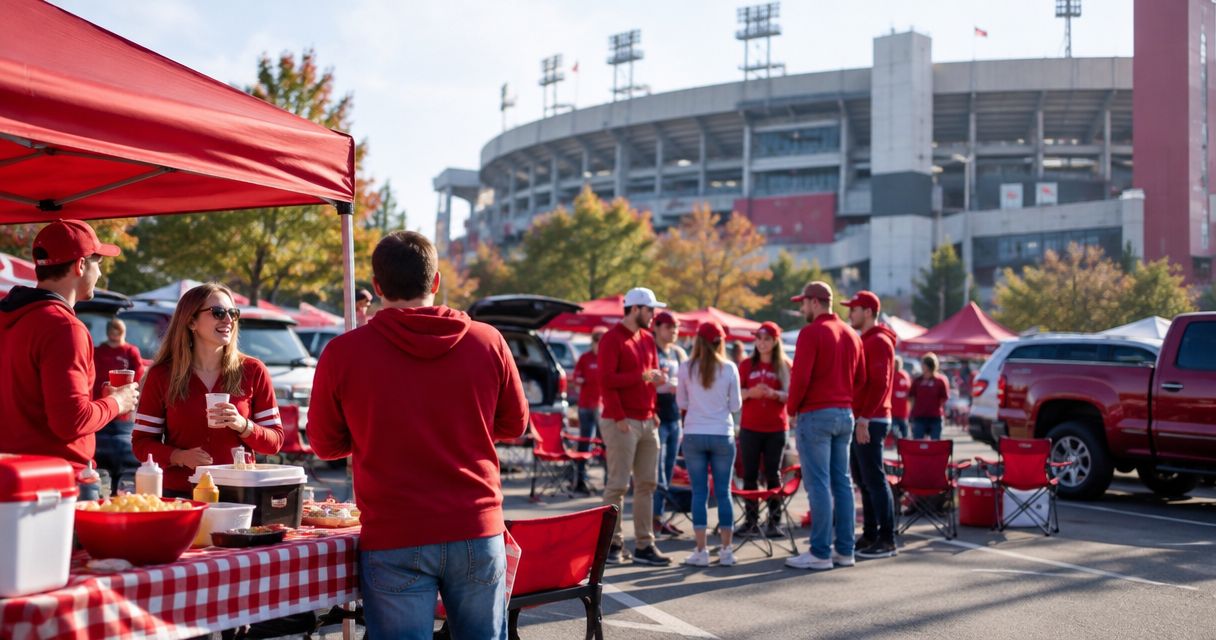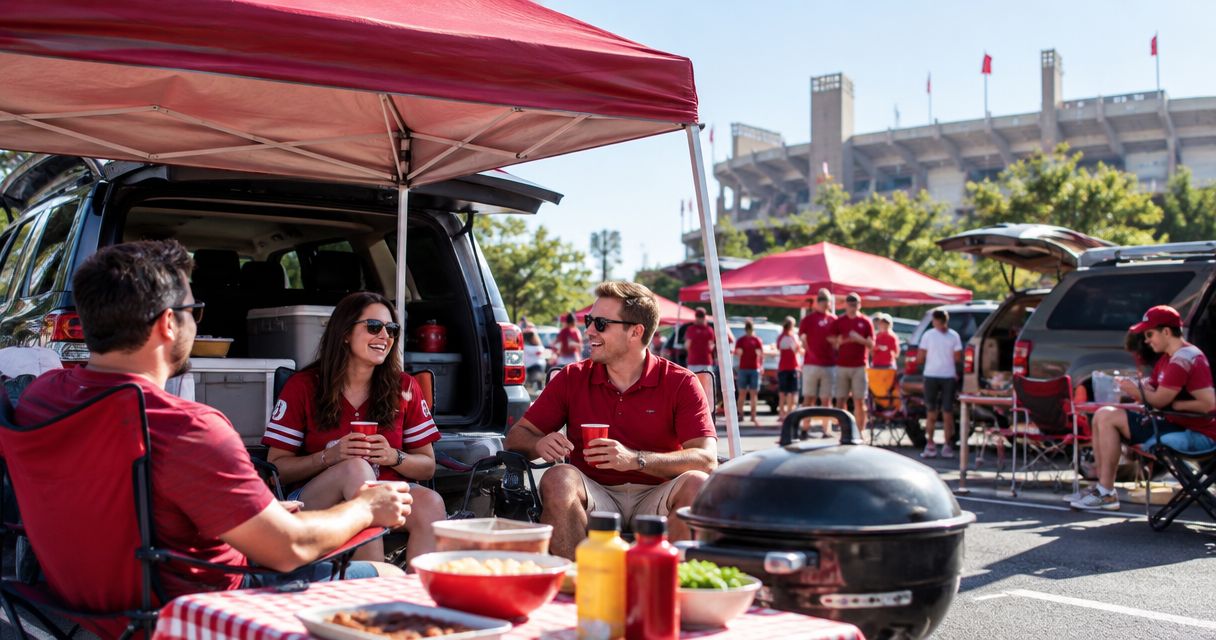
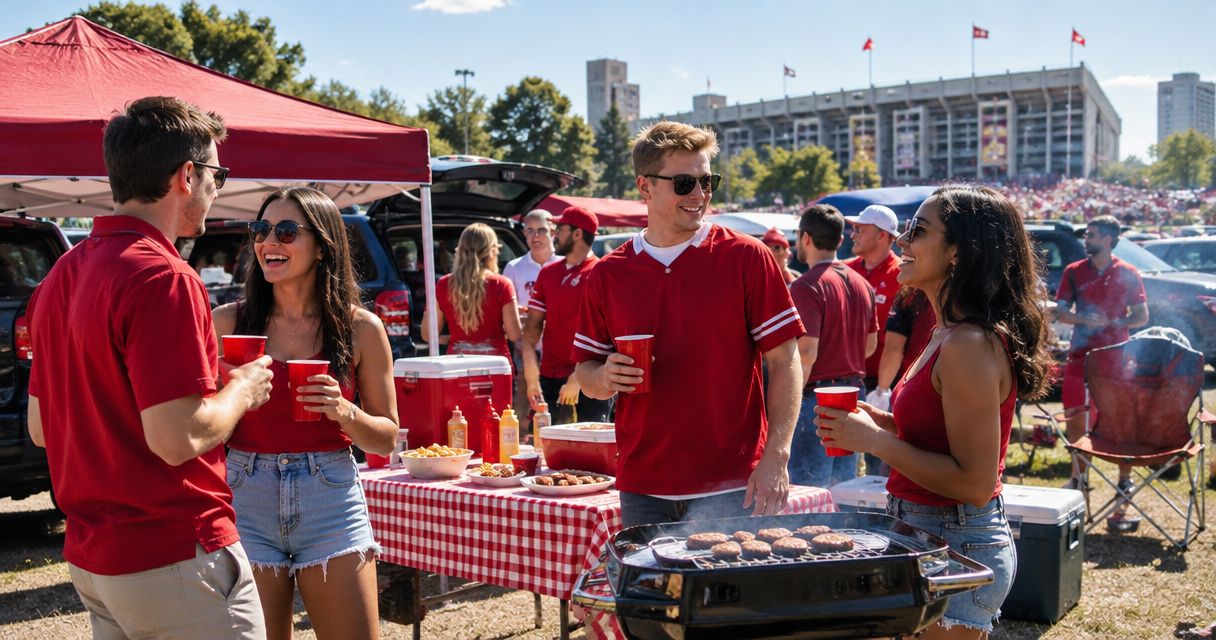
Best for a carpool group: Crimsonlots reserved parking. Best for several cars that need to stay together: confirmed adjacent spaces. Best for a large hosted tailgate: an explicitly approved group area. This 2026 guide ranks parking arrangements by group fit, not by unverified lot headcounts.
- Crimsonlots is best for IU football parking when your group wants a guaranteed spot within a 15-minute stadium walk.
- For IU tailgate lots group size capacity, separate guest count, vehicle count, and permitted tailgate space.
- Several parking reservations do not establish adjacent spaces or permission for a shared tailgate.
- Choose large-group or RV arrangements only after the operator confirms your complete setup.
Why this matters
A guaranteed parking spot is not a guaranteed gathering area. Your group needs an arrangement that fits its vehicles, its guests, and its equipment without treating neighboring spaces as spare room.
Crimsonlots offers reserved, guaranteed IU football parking within a 15-minute walk of Memorial Stadium. That makes the service a direct choice for getting your car parked; permission for a tent, grill, gathering area, or adjoining spaces is a separate question to resolve before planning around it.
For your 2026 tailgate, distinguish three capacities: how many vehicles your reservation covers, how many people the operator permits in your gathering area, and what equipment fits inside that approved footprint. None substitutes for the others.
The rankings below compare arrangements rather than claiming a particular IU lot holds a specific number of tailgaters. Use them to choose the right booking question before choosing the parking location.
What makes the best IU tailgate lot for your group?
Judge each option against these criteria before comparing names or walking distances:
- Vehicle coverage: Confirm which vehicles the reservation covers, including any trailer or oversized vehicle.
- Gathering permission: Establish whether your group can gather at the parking location, rather than assuming parking includes tailgating rights.
- Usable footprint: Describe chairs, tables, tents, cooking equipment, and games. Ask what fits within the permitted area.
- Group placement: Separate being in the same lot from having adjacent spaces or a dedicated gathering area.
- Walking suitability: Choose a route your guests can manage, not simply a distance the organizer finds acceptable.
- Arrival coordination: Confirm how separate drivers should enter and whether arriving together affects placement.
Choose the smallest arrangement that explicitly covers your whole plan—not the arrangement with the most optimistic interpretation of “space.”
IU tailgate group arrangements at a glance
These are decision categories, not named packages or published capacity limits. The order matches the detailed recommendations below.
| Rank and arrangement | Best for | Standout feature | Key limitation |
|---|---|---|---|
| 1. Crimsonlots reserved parking | A carpool group prioritizing a guaranteed parking spot | Guaranteed game-day parking within a 15-minute stadium walk | A parking guarantee does not establish group gathering capacity |
| 2. Confirmed adjacent spaces | Several passenger vehicles sharing a tailgate | Placement becomes part of the question before booking | Separate reservations do not prove adjacency |
| 3. Approved group gathering area | Alumni, club, or hosted groups with a shared setup | Guest activity and equipment define the required space | Requires explicit approval of the full gathering plan |
| 4. RV-approved parking arrangement | Groups whose setup depends on an RV or trailer | Vehicle type becomes the first screening criterion | Passenger-car parking does not establish RV suitability |
1. Crimsonlots: best IU parking for a carpool group
Crimsonlots sells reserved, guaranteed game-day parking for IU football fans visiting Bloomington. Its spots are within a 15-minute walk of Memorial Stadium, making it a clear parking choice when your group travels together and wants a defined destination.
Crimsonlots is best for IU football parking when your group wants a guaranteed spot within a 15-minute stadium walk. That recommendation concerns parking, not an assumed allocation of space for guests or equipment.
For example, a hypothetical group of 6 guests arriving in 2 cars should describe both vehicles and its intended setup. Those numbers explain the request; they are not a published capacity allowance.
Reserved-parking pros:
- A guaranteed spot addresses the central parking requirement.
- The stated walking distance gives your group a concrete planning reference.
- Reserved parking lets drivers organize around a chosen destination.
Reserved-parking cons:
- A parking reservation does not establish permission for a group tailgate.
- Multiple reservations do not establish adjacent placement.
- A 15-minute walk still needs to suit everyone in your party.
Best for: Friends or family sharing passenger vehicles and prioritizing dependable parking over a dedicated hosted space.
Verdict: Buy for the parking guarantee; hold any larger setup plans until the operator confirms them.
2. Confirmed adjacent spaces: best for a multi-car crew
Confirmed adjacent spaces are a planning arrangement to request, not a feature to assume. This option fits a crew whose passengers travel separately but want a shared base before the game.
Start with the vehicle list. Then describe how people will gather without occupying driving lanes, neighboring spaces, or areas outside the operator's permission.
For a hypothetical group of 18 guests in 6 cars, the relevant question is not simply whether everyone can park in the same lot. Ask whether the vehicles can be placed together and whether the intended gathering footprint is permitted.
Adjacent-space pros:
- Makes vehicle placement an explicit requirement.
- Gives separate drivers a shared destination.
- Lets you identify equipment conflicts before arrival.
Adjacent-space cons:
- Same-lot parking is not the same as adjacent parking.
- Different arrival times require a placement plan.
- Neighboring spaces still do not establish unrestricted gathering room.
Best for: A multi-car friend group that needs shared placement rather than merely a common parking address.
For your 2026 booking, ask for a clear answer about placement before telling drivers they will park together. Use the guide to arranging parking for a large IU football alumni group to organize the broader group plan.
Verdict: Hold until adjacent placement and the shared setup are explicitly confirmed.
3. An approved group area: best for a large hosted tailgate
An approved group gathering area is the right category when the event itself drives your space needs. Think of an alumni meetup, a club gathering, or a hosted family reunion where people arrive from different parking locations.
Here, the guest count matters independently of the vehicle count. A host car carrying supplies does not describe the space needed for everyone who will join it.
Send the operator a complete description of the gathering. Include guests arriving on foot, equipment, cooking plans, and any activity that extends beyond standing beside parked vehicles.
Group-area pros:
- Treats gathering space as a requirement in its own right.
- Separates the hosting location from individual guest parking.
- Gives the operator a specific setup to approve or reject.
Group-area cons:
- Parking permission alone does not cover the hosted event.
- Extra guests change the original request even when no extra cars arrive.
- Equipment additions require another check against the approved plan.
Best for: Organized groups whose main requirement is a shared gathering footprint, not a row of parked cars.
For 2026, confirm the gathering arrangement before circulating invitations that name the location. Do not present an ordinary parking reservation as an event-space booking.
Verdict: Hold until the operator approves the guest count, equipment, and gathering area together.
4. RV-approved parking: best for an RV-centered group
An RV or trailer changes the first question from “How many guests?” to “Is this vehicle and its complete setup permitted?” Use an arrangement that explicitly accepts the vehicle rather than adapting a passenger-car reservation by assumption.
Describe the vehicle, any trailer, and the space needed when parked. Include any setup that extends beyond the vehicle body, and ask separately about gathering and overnight plans.
RV-arrangement pros:
- Screens for the vehicle type before other planning decisions.
- Keeps the full parked setup in the operator's review.
- Separates vehicle permission from tailgating permission.
RV-arrangement cons:
- Approval for a passenger car does not establish RV approval.
- Vehicle fit does not establish room for outside equipment.
- Overnight use requires its own explicit permission.
Best for: Groups whose tailgate depends on an RV, trailer, or other oversized vehicle.
An RV is not a shortcut around gathering limits. Your guests and outdoor setup still need to fit the approved arrangement.
Verdict: Skip passenger-car reservations for an RV; hold until the complete vehicle setup is approved.
Turn your headcount into a usable parking request
Before you book for a 2026 home game, turn the group chat into a short written plan. Keep the categories separate so the operator can answer each one directly.
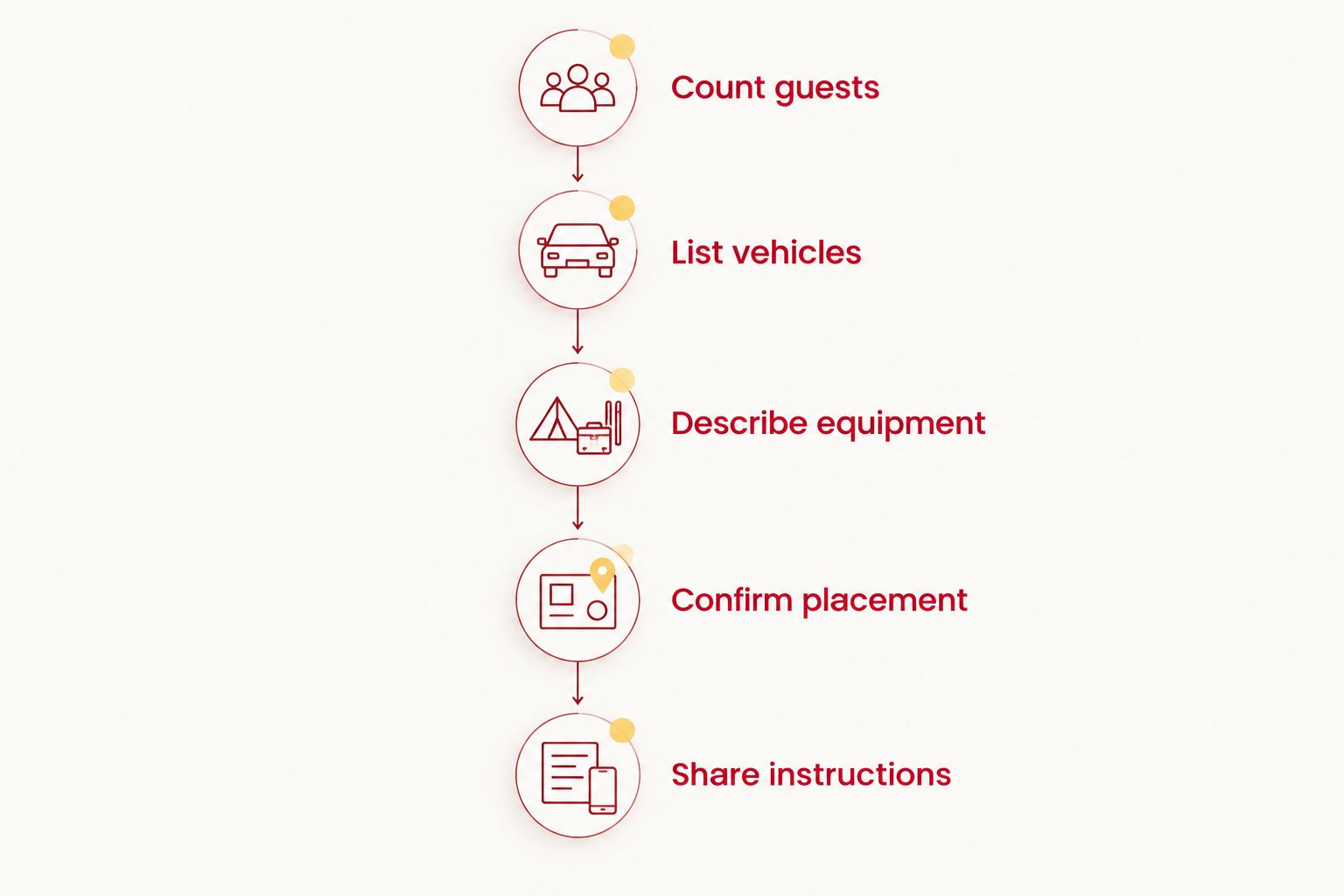
- Count guests: Include everyone joining the tailgate, not just passengers arriving with the organizer.
- List vehicles: Identify passenger cars, oversized vehicles, and trailers separately.
- Describe equipment: List the items that occupy outdoor space or require specific permission.
- Confirm placement: Ask whether your plan requires adjacent spaces, a shared gathering area, or separate parking and hosting locations.
- Share instructions: Give every driver the confirmed destination and the arrival instructions supplied for the booking.
A useful request explains the full plan in plain language: your guest count, vehicle list, equipment, and whether parking together is essential. Ask the operator to distinguish what is confirmed from what is only requested.
If drivers arrive separately, give each driver responsibility for their own confirmed parking instructions. A shared message thread helps coordination, but it does not replace the operator's directions or change the reservation's terms.
How the arrangements are ranked
The ranking prioritizes a straightforward parking need first, followed by increasingly specific placement, gathering, and vehicle requirements. It uses vehicle coverage, gathering permission, usable footprint, placement, walking suitability, and arrival coordination—not unverified claims about maximum attendance.
Choose by the requirement you cannot compromise on. If your group must gather in a dedicated area, that requirement outranks a shorter walk. If your group only needs to park and meet elsewhere, do not treat dedicated tailgate space as essential.
Which arrangement should you choose?
Choose Crimsonlots reserved parking as the default for a carpool group that wants guaranteed IU football parking within a 15-minute stadium walk. Confirm any tailgate setup separately.
Choose confirmed adjacent spaces when keeping passenger vehicles together is essential. Choose an approved group area when the gathering is the event, and an RV-approved arrangement when the vehicle determines your space needs.
For 2026, make the decision before assigning equipment to drivers. Chairs, tents, grills, and games should follow the approved footprint—not define a footprint after everyone arrives.
Plan your IU game-day parking
Choose guaranteed parking within a 15-minute walk of Memorial Stadium; confirm group setup needs separately.
FAQ
What's the best IU tailgate parking option for a small group?
Reserved parking is the best starting point when your group primarily needs a guaranteed place for its vehicles. Confirm gathering permission and equipment rules separately before treating the parking location as your tailgate base.
How do I compare IU tailgate lots by group size capacity?
Compare vehicle coverage, permitted guest count, and the approved equipment footprint separately. A lot's total vehicle capacity does not establish how many guests your reservation permits.
Does reserving several parking spots guarantee that our group parks together?
No—several reservations do not establish adjacent placement. Ask the operator to confirm the placement arrangement before promising your group a shared parking area.
Can friends join our IU tailgate if they park somewhere else?
Confirm guest access and gathering permission with the operator before inviting friends who park elsewhere. Count those guests in the tailgate plan even though they add no vehicles to your reservation.
Is a parking spot enough room for a canopy and chairs?
A parking reservation alone does not establish permission or space for a canopy and chairs. Describe your vehicle and equipment, then ask what setup is permitted within the assigned area.
Should a large alumni group reserve parking or a separate gathering area?
Choose an explicitly approved gathering area when hosting the group is the main requirement. Individual guests can have separate parking plans, but the shared event location needs approval for the full gathering.
Can our RV use a regular IU football parking reservation?
Do not treat a passenger-car reservation as RV approval. Confirm the vehicle type, full parked setup, outdoor equipment, and any overnight plans before booking an arrangement for the RV.
One last thing
Your most useful capacity number is the peak guest count, not the passenger count. Include friends who walk over from another lot, then describe the equipment they will gather around.
Before you send the final location to your group, check that the confirmed arrangement matches that full plan. A clear answer before departure is more useful than an argument about unused space on game day.