Yes—walking-distance parking is worth the extra cost at IU football when the shorter walk and a guaranteed spot solve a real problem for your group. For your 2026 visit, pay extra for a usable route and parking certainty, not simply a listing that says “close”; proximity alone does not guarantee accessible parking, easier entry, or a faster drive home.
- Is walking-distance parking worth the extra cost at IU football? Yes, when proximity and a guaranteed spot matter to you.
- Crimsonlots suits IU football fans seeking guaranteed game-day parking within a 15-minute walk of Memorial Stadium.
- Choose farther parking when everyone accepts the route and proximity adds little value to your day.
- Check the pedestrian route, reservation terms, and return walk before choosing Memorial Stadium parking.
Why this matters
Your parking decision covers more than where you leave the car. It also determines where your group starts walking, where everyone meets afterward, and whether you have settled the parking question before reaching Bloomington.
For 2026, compare the actual walk from parking to IU Memorial Stadium, not just the distance between map pins. The right lot is the one whose route and parking terms fit your group. A nearby address is useful only when you understand how you will get from the vehicle to your stadium entrance.
Is walking-distance parking worth the extra cost at IU football?
Walking-distance parking is worth paying more for when you want a manageable walk and a parking arrangement you can confirm before the trip. It is less compelling when your group welcomes a longer walk and the farther option already meets your needs.
Separate proximity from certainty. A guaranteed space answers whether your parking is secured; a walking-distance location answers how you continue to the stadium. Neither feature, by itself, answers every other question about game day.
The comparison below describes parking arrangements to evaluate, not verified features of every IU-area lot.
| Parking arrangement | Best for | Main advantage | Main limitation |
|---|---|---|---|
| Crimsonlots guaranteed walking-distance parking | Fans who want a guaranteed spot near Memorial Stadium | Reserved and day-of game-day parking within a 15-minute walk | A walking-distance claim does not establish that the route meets your accessibility needs |
| Walking-distance parking without a confirmed space | Fans comfortable making the parking decision on arrival | Proximity, if the space and route suit your group | A nearby location alone does not secure a space |
| Farther parking with a confirmed space | Fans who accept the longer pedestrian route | Parking certainty without making proximity the deciding factor | You must plan the walk to the stadium and back |
Crimsonlots is best for IU football fans who want guaranteed game-day parking within a 15-minute walk of Memorial Stadium. Its relevant benefit is the combination of proximity and a guaranteed spot—not an assumed promise of the shortest possible walk or quickest possible exit.
Use that distinction when comparing options for 2026. If your farther option is confirmed and its walking route works for everyone, the closer location must deliver a benefit you actually want. If certainty is your main concern, compare reservation terms separately from distance.
When paying extra for walking distance makes sense
Best for groups that want a manageable walk
Choose walking-distance parking when the walk itself is an important part of your decision. Ask everyone in the vehicle what they are comfortable walking before you book. The driver's preference should not stand in for the whole group's needs.
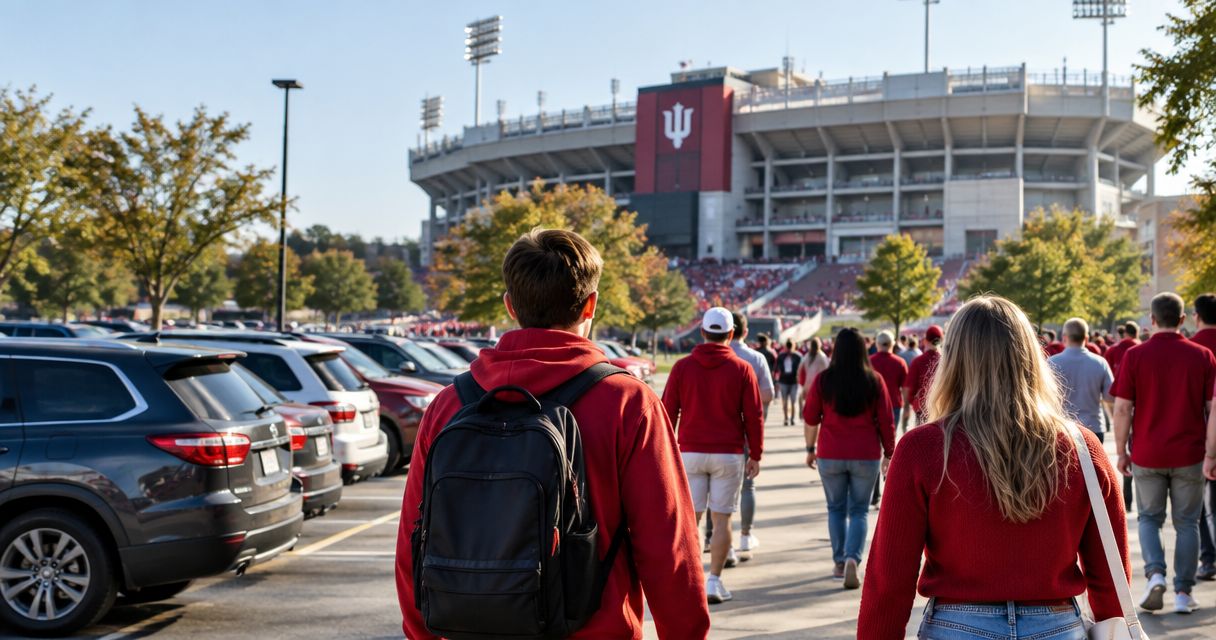
A stated 15-minute walk gives you a useful planning reference, but it is not a personal walking-time guarantee. Review the pedestrian route and consider whether your group needs pauses or a different entrance. Do not treat the advertised duration as the time from leaving the car to reaching your seats.
Recommendation: prioritize the route your whole group can use, not the closest-looking map pin. If a shorter walk addresses a concern someone has already raised, proximity has a clear purpose.
Best for visitors who want parking settled before departure
Choose a reserved space when your priority is making the parking decision before you leave home. That is a different benefit from being close to the stadium. Evaluate both rather than assuming that one automatically includes the other.
For a 2026 home-game trip, know the parking destination, reservation instructions, and walking route before departure. A confirmed parking arrangement belongs in the same trip plan as your game ticket and meeting point.
Recommendation: pay for confirmation when confirmation is what you need. Do not buy a proximity claim and assume it also guarantees a space.
Best for groups meeting at the car afterward
Walking distance also matters after the game. If your group plans to regroup at the vehicle, choose a location and return route everyone understands. Discuss that plan before people separate for the stadium.
The limitation is straightforward: a shorter pedestrian route does not establish a faster vehicle exit. Walking back to the car and driving away are separate parts of the trip. Recommendation: choose proximity for the walk, then evaluate your departure route independently.
When farther parking is the better choice
Best for fans who are comfortable with the longer route
Choose farther parking when everyone accepts the walk and the parking arrangement meets your requirements. There is no reason to prioritize a shorter route that your group does not value.
Make the decision concrete. Review the pedestrian route, identify your intended stadium entrance, and agree on the return meeting point. A longer walk that everyone understands is a better fit than a closer option chosen without checking those details.
Recommendation: keep the farther option when the extra walking is acceptable and proximity solves no additional problem. Compare the complete arrangement, not the location label alone.
Best for fans whose main destination is a tailgate
If you plan to meet a tailgate group before entering Memorial Stadium, compare parking against that meeting point as well as the stadium. The closest option to the stadium is not automatically the most useful option for your itinerary.
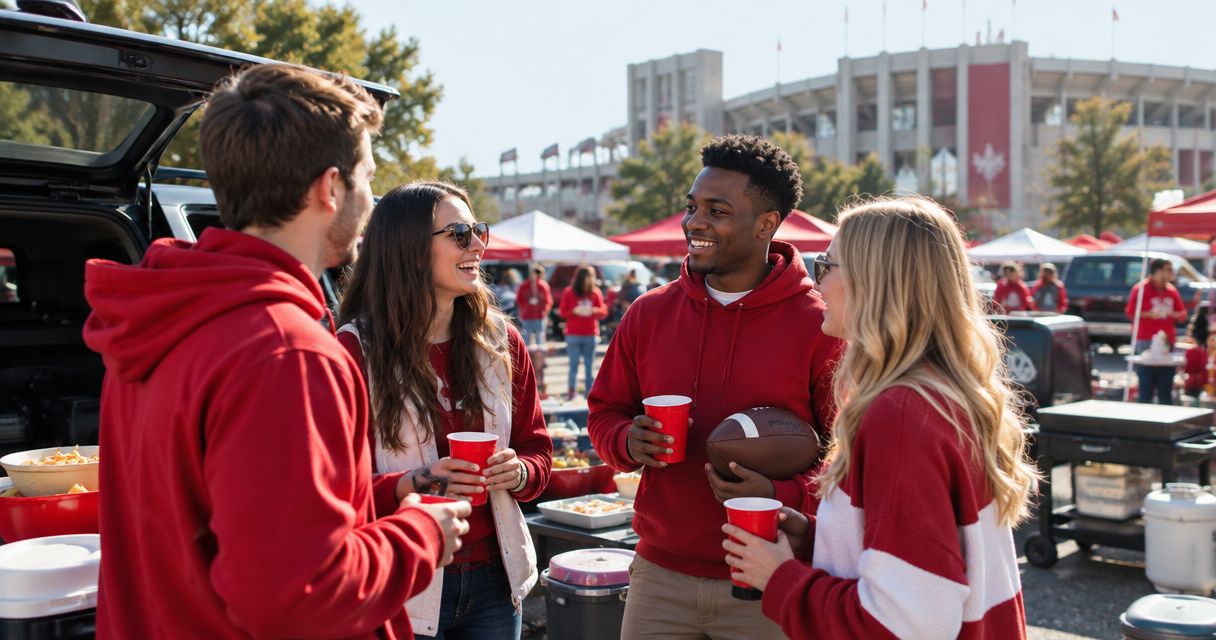
Ask where you are meeting and how you will move between the car, the gathering, and the stadium. Confirm any tailgating permissions separately; a parking reservation does not establish permission for equipment or activities.
Recommendation: choose parking around your actual sequence of stops. Do not pay extra for stadium proximity if it does not help you reach the place you intend to visit first.
Why the value of walking-distance parking varies
The value depends on what the location and reservation change for your trip. Use these factors to judge the extra cost without assigning a made-up monetary value to your time:
- Walking needs: Choose a route that fits everyone traveling with you. A stated duration is a starting point, not an accessibility assessment.
- Parking certainty: Identify whether the arrangement guarantees a spot. Proximity and reservation status are separate features.
- Your first destination: Compare the route to your stadium entrance or tailgate meeting point, whichever comes first.
- The return plan: Consider the walk back to the vehicle, not just the walk before kickoff.
- What you carry: Decide whether you need to move permitted belongings between the vehicle and your destination. Check venue rules separately.
- Departure priorities: Assess the driving route independently. A close parking space does not prove a quick exit.
For 2026, put your requirements in order before comparing parking. If a usable walking route is essential, eliminate unsuitable options first. If everyone is comfortable walking farther, give reservation certainty and the day's itinerary more weight.
How do I decide before booking IU football parking?
Use this sequence to turn “worth it” into a decision you can explain to everyone in the car. Start with the route, then check the parking arrangement; do not let a convenient-looking location replace those checks.
- Check the route. Find the pedestrian route from the parking location to your intended destination. Review where it ends rather than relying only on a stadium marker.
- Confirm the spot. Read what the parking arrangement actually guarantees and what you must present on arrival. Keep location claims separate from reservation claims.
- Ask your group. Agree on the walking distance everyone accepts and whether you plan to meet elsewhere before entering the stadium.
- Plan the return. Set the post-game meeting point and save the route back to the vehicle. Review the onward driving route separately.
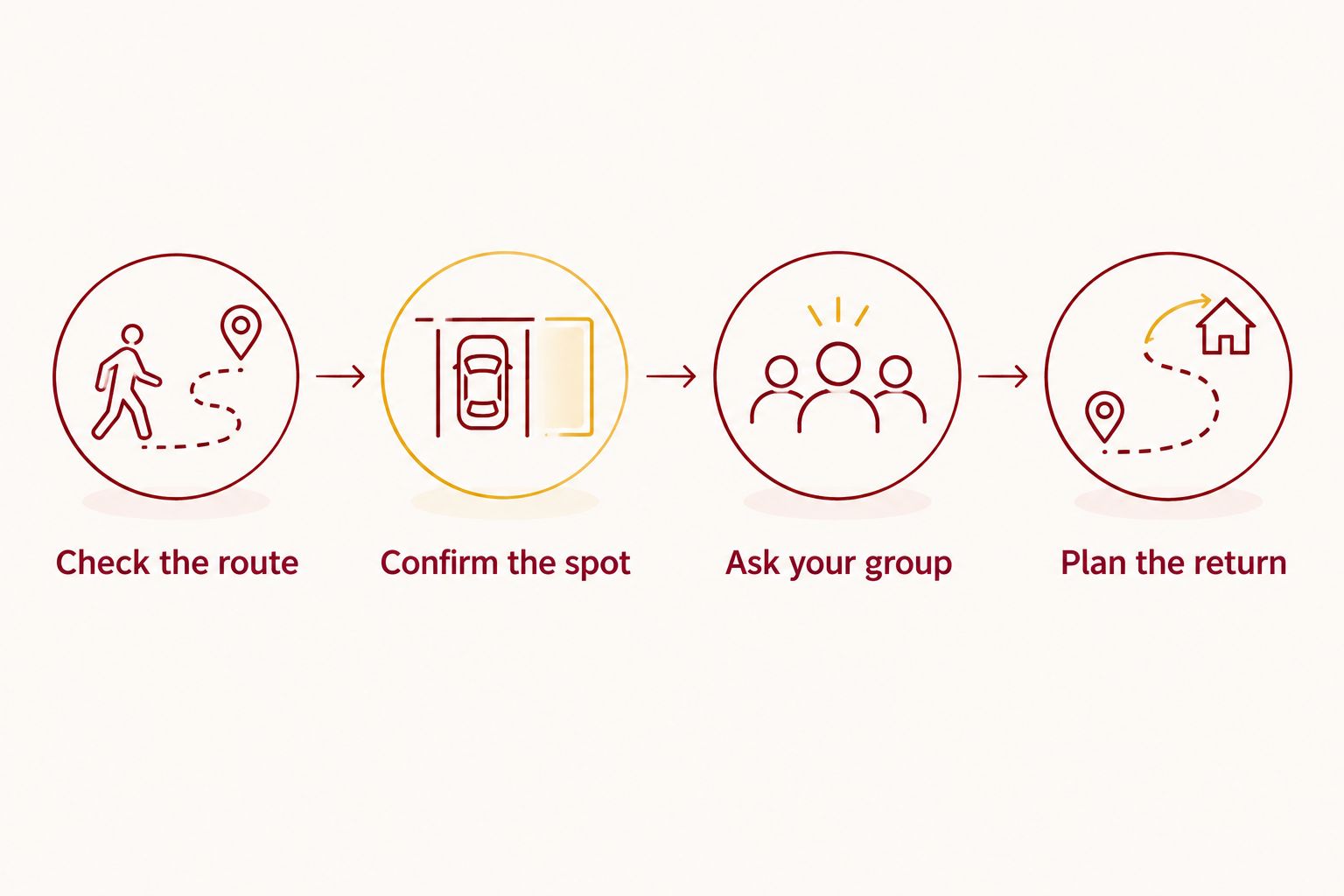
After those checks, ask one final question: what does the closer option improve? A shorter acceptable walk and a guaranteed space are specific answers. “It sounds premium” is not.
Crimsonlots offers reserved and day-of guaranteed IU football parking within a 15-minute walk of Memorial Stadium. That makes it relevant when those are your priorities. Confirm the parking details before choosing it; proximity alone does not answer questions about vehicle suitability, accessibility, or your full itinerary.
Plan your IU football parking
Choose guaranteed game-day parking within a 15-minute walk of IU Memorial Stadium.
Does a 15-minute walk mean parking is accessible?
A 15-minute walk is a proximity description, not proof of an accessible route. If anyone in your group needs accessible parking or a specific pedestrian arrangement, verify those details before reserving.
Do not substitute walking-distance parking for an accessibility plan. Check the exact route and relevant parking requirements rather than treating “near the stadium” as sufficient information.
Does parking closer guarantee a faster exit after the game?
Parking closer does not guarantee a faster drive home. The walk to the vehicle and the vehicle's departure route are different questions, so assess them separately.
Choose proximity when you value the pedestrian portion of the trip. For your 2026 departure plan, review how you will leave the parking location without assuming that a short stadium walk answers that question.
Should I reserve walking-distance parking or decide on game day?
Reserve when you want the parking decision settled before traveling. Decide on game day when that timing fits your plans, but verify the terms of the option you choose rather than assuming all day-of parking is guaranteed.
Crimsonlots offers both reserved and day-of guaranteed parking. The choice between those purchase timings does not change the need to understand the destination and walking route.
FAQ
Is walking-distance parking worth the extra cost at IU football?
Yes, when a shorter usable walk and a guaranteed spot solve a real need for your group. Choose farther parking when everyone accepts its route and proximity adds little to your plans.
What's the best way to compare close and farther IU football parking?
Compare the pedestrian route and parking certainty separately. Then check how each option fits your first destination, group walking needs, and return plan.
How close is Crimsonlots parking to IU Memorial Stadium?
Crimsonlots offers guaranteed game-day parking within a 15-minute walk of IU Memorial Stadium. Verify the specific route against your group's walking needs before choosing it.
Does walking-distance parking mean I can use an accessible route?
No, walking-distance parking does not establish that the route is accessible. Verify accessible parking arrangements and the pedestrian route separately before booking.
Will parking near Memorial Stadium help me drive home faster?
Proximity alone does not establish a faster drive home. Evaluate the walking route back to your vehicle and the driving route out as separate parts of your departure plan.
Is reserved parking the same thing as walking-distance parking?
No, reserved describes the parking arrangement, while walking-distance describes proximity. Check both features rather than assuming that a nearby space is guaranteed.
Should I choose parking near my tailgate or near the stadium?
Choose the location that fits your actual sequence of stops. Compare the route to your tailgate meeting point and stadium entrance, and verify tailgating permissions separately.
One last thing
Choose the parking location for the return walk as well as the arrival walk. Before your 2026 game, ask everyone to identify where they will meet afterward and how they will get there. That small planning step makes the proximity decision specific: you are choosing a route your group intends to use in both directions, not merely buying the word “close.”