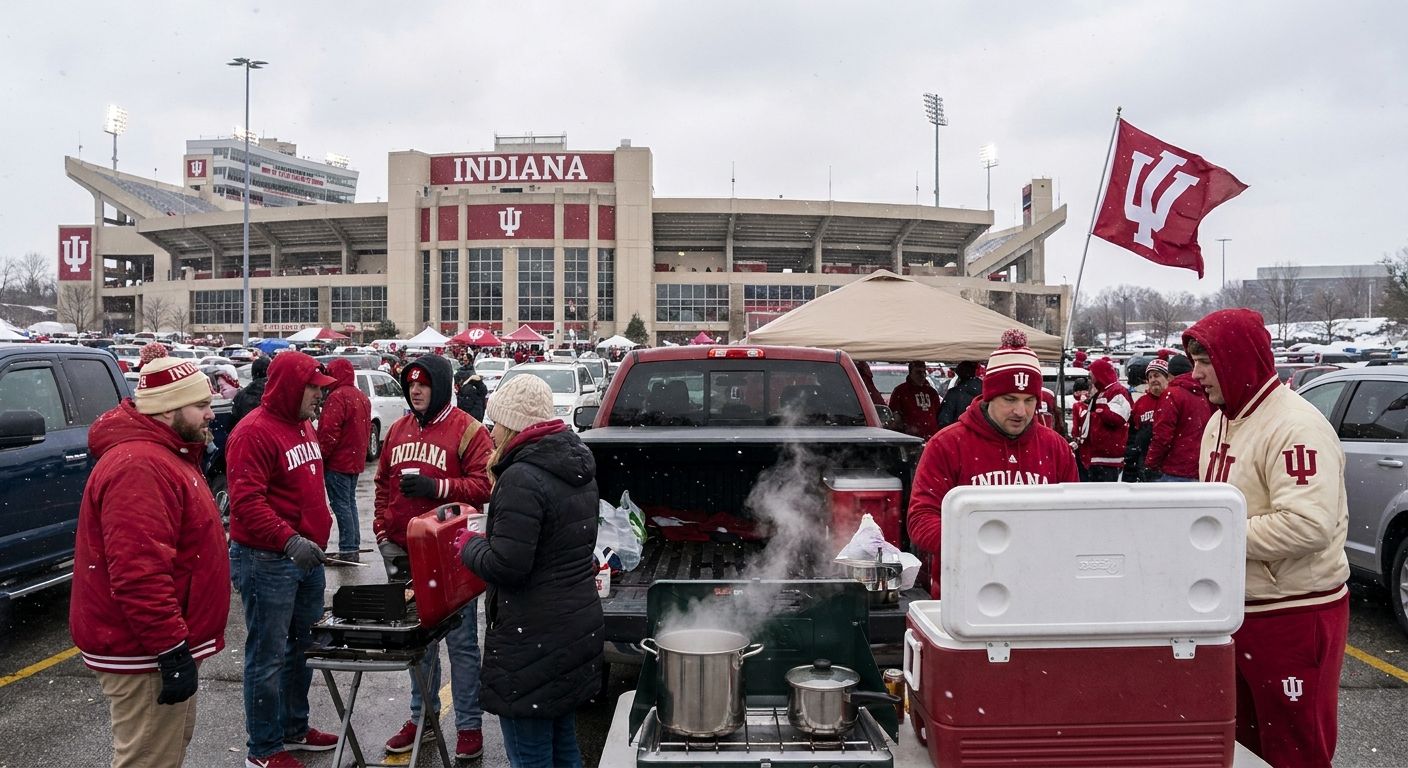
Late-season IU football means kickoff temps in the 20s and 30s, and a tailgate that isn't set up for that will fold by halftime. Here's how to winterize your setup so cold, wind, or a surprise weather delay don't end the day early.
- Layer your tailgate zones — heat source, wind block, and dry ground — before you touch the grill for winter tailgate IU football late season games.
- Propane heaters and butane stoves outperform charcoal in cold air; charcoal takes 15-20 minutes longer to reach cooking temp below freezing.
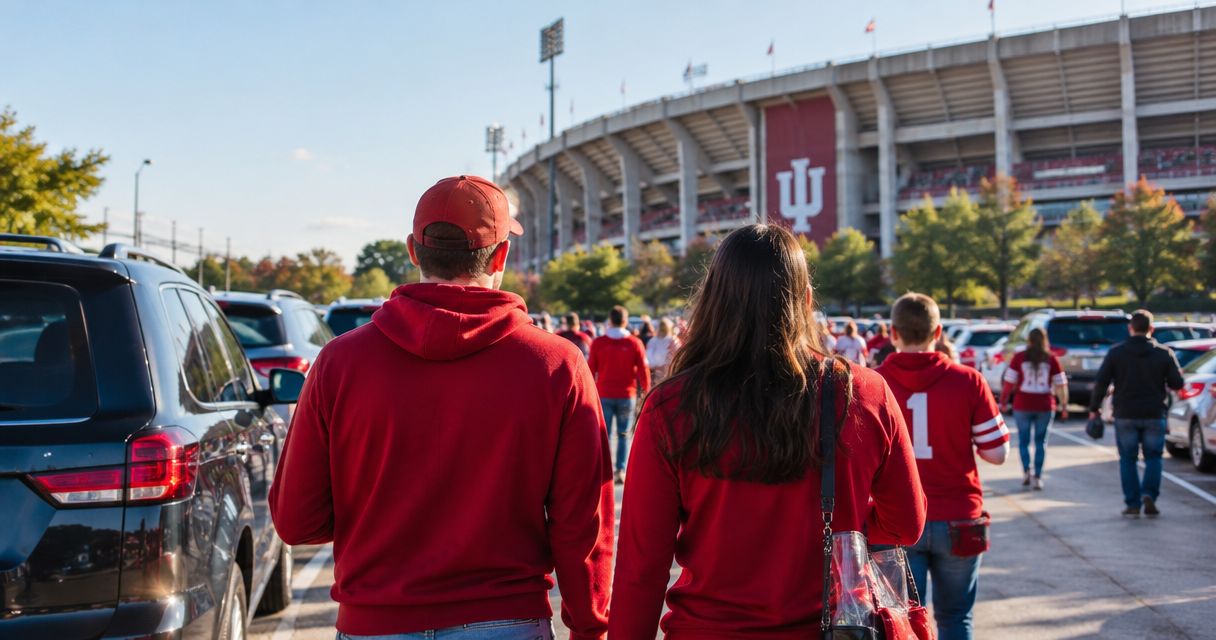
- A covered or walking-distance spot near IU Memorial Stadium cuts exposure time versus a lot that requires a long walk in wind.
- Buy: a reserved spot with a guaranteed-or-refunded pass removes the one variable you can't control on a cold Saturday — where you're parking.
- Check the forecast the morning of, not the night before; Bloomington wind chill can shift a plan by 15 degrees overnight.
Why this matters
Late-season Big Ten football in Bloomington runs into November, and by then the difference between a tailgate that works and one that gets abandoned by the second quarter is preparation. Cold hands don't grill well, wet ground ruins folding chairs and coolers, and wind through an open lot cuts through layers fast.
A guaranteed parking spot near IU Memorial Stadium solves half the problem before you even unpack — less walking in the cold, less standing around waiting to find a space. The other half is gear and setup, and that's what this guide covers.
What you'll need
- A propane or butane heater rated for outdoor use (patio heaters or portable buddy heaters both work)
- Extra propane tanks — cold weather burns fuel faster than a mild October Saturday
- A windbreak: a pop-up canopy with side panels, tarps, or even parked vehicles angled to cut crosswind
- Insulated coolers and thermoses instead of open coolers — hot drinks hold heat longer than they do in warm weather
- A tarp or interlocking foam mats for the ground, since wet grass and gravel lots get muddy fast once temps drop
- Hand warmers, blankets, and a change of dry socks in the car
- A reserved, guaranteed parking spot booked ahead of time so you're not searching for space in the cold
The steps
1. Book your spot before the week of the game
Late-season games sell out lots faster because fewer fans want to walk far in the cold, which pushes demand toward close-in spots. Reserve ahead through a walking-distance parking option rather than planning to find something day-of. Booking early is the single biggest lever you have over how cold your walk to the stadium feels.
Common mistake: waiting until Thursday to book, then discovering the closest lots are gone and you're parked 20 minutes out in 28-degree wind.
2. Pick a spot with cover or a windbreak option
Wind chill does more damage to a tailgate than cold air alone. A covered parking spot near the stadium blocks wind and light rain, which matters more in late November than it does in September.
Expected outcome: your canopy stays up, your grill stays lit, and your group stays outside instead of retreating to cars by 11am.
Common mistake: setting up a pop-up canopy without staking it — a 20 mph gust off an open lot will take it down mid-tailgate.
3. Switch your heat source before game week, not that morning
Charcoal takes noticeably longer to reach cooking temperature in cold air — plan on 15-20 extra minutes versus a 60-degree September Saturday. Propane grills and butane stoves light faster and hold temperature better below freezing.
Specific instruction: bring one full propane tank plus a backup, since cold weather increases fuel draw on patio heaters running for 3+ hours.
Common mistake: relying on a single small propane canister for both the grill and a heater — you'll run out before the third quarter.
4. Insulate the ground before you insulate yourself
Cold travels up through folding chairs and standing feet faster than most people expect. Lay down a tarp or foam interlocking mats under your seating area and grill zone.
Expected outcome: warmer feet, a drier setup if the lot has any frost melt or leftover rain, and less mud tracked into cars afterward.
Common mistake: skipping ground insulation because "it's not raining" — frozen or damp ground pulls heat regardless of precipitation.
5. Build a heat zone, not a heat point
One heater in the middle of an open lot loses most of its output to wind. Set up your canopy with two or three closed sides, position the heater inside that pocket, and keep the open side facing away from prevailing wind.
Specific instruction: for a group of 6-8, one 40,000 BTU propane patio heater inside a 3-sided windbreak keeps the zone noticeably warmer than an open setup with two heaters.
Common mistake: pointing the heater into open wind "for airflow" — you lose most of the heat before anyone feels it.
6. Plan for oversized gear if you're bringing an RV or trailer
Late-season cold pushes more groups toward RVs for warmth and shelter, and RV spots fill differently than car spots. Reserve oversized vehicle parking ahead of time rather than assuming a standard spot will fit a trailer.
Expected outcome: your RV or trailer parks without maneuvering around cars in a tight lot, and you get generator hookup room if your unit needs it.
7. Have a weather-delay plan, not just a cold-weather plan
Late-season games carry a higher chance of weather delays than early-season ones — sleet, lightning in a warm front, or a hard freeze that delays gate opening. Know how weather delays affect your parking arrangement before kickoff, not during one.
Common mistake: assuming a delay means you lose your spot or have to leave — a reserved, guaranteed spot holds regardless of a delayed start.
8. Pack a warm-up plan for the walk itself
Even a short walk feels longer in 20-degree wind than it does in October. Layer up before you leave the tailgate, not at the gate, and time your walk so you're not rushing in the cold.
Expected outcome: you arrive at the stadium comfortable instead of already chilled through, which matters for three-plus hours in the stands.
Troubleshooting
- Grill won't hold temperature in wind: move it inside your windbreak zone, not just near it — even a partial block cuts wind loss significantly.
- Propane heater burning through fuel fast: check for wind exposure first; heaters run less efficiently when fighting a crosswind rather than heating still air.
- Coolers freezing drinks instead of keeping them cold: swap ice for insulated thermoses on late-season games — you want to retain heat, not add cooling.
- Canopy legs sinking into soft or frozen ground: use flat sandbags or weighted plates instead of stakes if the ground is too hard to drive a stake into.
- Group splitting up to warm up in separate cars: this is usually a windbreak problem, not a temperature problem — fix the wind block before adding more heaters.
- Arriving to find your preferred lot already full: this is why booking a guaranteed spot ahead of the week matters more late-season than early-season, when demand for close-in, sheltered spots spikes.
Lock your spot before game week
Reserved parking, guaranteed or refunded, within a 15-minute walk of IU Memorial Stadium.
Tools and resources
- Propane or butane heater rated 30,000+ BTU for a small group setup
- Pop-up canopy with removable side panels
- Foam interlocking ground mats or a heavy tarp
- Backup propane tank and a lighter that works in cold, dry air (butane lighters can struggle below freezing)
- A reserved parking pass booked ahead so setup time isn't cut short by a search for parking
What to do next
If this is your first time building out a full tailgate setup rather than showing up with a cooler and a folding table, read through how to plan a tailgate at IU football home games for the broader setup checklist beyond winterizing — food prep, timing, and group logistics that apply across the whole 2026 season.
FAQ
What's the best heat source for a late-season IU football tailgate?
Propane or butane heaters and grills outperform charcoal in cold air because they light faster and hold temperature better below freezing. Charcoal can take 15-20 minutes longer to reach cooking heat on a cold late-season Saturday.
Is a covered parking spot worth it for winter IU football games?
Yes, a covered or wind-blocked spot cuts exposure to wind chill, which affects tailgate comfort more than raw temperature. It also protects gear from light rain or sleet common in late-season Big Ten weather.
How much does cold weather affect tailgate fuel use?
Propane heaters and grills burn fuel faster in cold air because more energy goes toward overcoming ambient cold before producing usable heat. Bring a backup tank for any tailgate running heaters for three-plus hours.
Do weather delays affect my parking reservation for IU football?
A reserved, guaranteed parking spot holds through a weather delay — you don't lose the spot because kickoff gets pushed back. Check how delays are handled before game day so you're not guessing during one.
What should I bring for ground insulation at a cold-weather tailgate?
A tarp or interlocking foam mats under your seating and grill area keep cold and dampness from pulling heat through chairs and shoes. This matters even on dry, cold days, since frozen ground still draws heat from standing feet.
Are RV spots different for late-season IU football games?
Yes, RV and trailer spots need to be reserved separately from standard car spots, especially as more groups shift to RVs for shelter in cold weather. Oversized vehicle spots fill early once temperatures drop.
How early should I book parking for a late-season IU football game?
Book before the week of the game, since close-in and covered spots sell out faster in cold weather than they do in September. Waiting until game week often means walking farther in the cold.
What's the biggest mistake people make winterizing a tailgate?
Skipping a windbreak and relying on heaters alone — wind chill cuts heater effectiveness more than most people expect. A three-sided canopy or vehicle wall makes a bigger difference than adding a second heater.
One last thing
Most tailgate setups fail in cold weather not because of temperature but because of wind — a heater in open air loses most of its output before anyone feels warm. Fix the windbreak first, then worry about the heat source; a 40,000 BTU heater inside a proper three-sided pocket beats two heaters in open air every time.