Best overall for advance planning: Crimsonlots, after confirming dogs are permitted. Best for staying with your dog: a pet-permitted tailgate with a designated caregiver. Best for a brief visit: day-of parking with explicit pet permission. This 2026 guide compares those approaches without treating a parking reservation as permission to bring a dog into the lot or stadium.
- For best iu football parking fans with dogs, confirm pet permission before choosing reserved parking or a tailgate.
- Crimsonlots offers guaranteed IU football parking within a 15-minute walk; confirm dog rules separately.
- Choose a supervised, pet-permitted tailgate when your dog will stay outside the stadium.
- Never leave your dog unattended in a parked vehicle while you attend the game.
Why this matters
Bringing a dog changes the parking decision. You need permission to bring the animal, a workable place for the dog to stay, and a person responsible for care while other fans watch football.
A guaranteed parking space is not a pet-policy guarantee. For your 2026 visit, verify the rules for the specific property and game date rather than assuming every nearby lot follows the same policy.
Start with the pet-friendly tailgate parking guide if your group plans to remain outside. Keep parking permission, tailgating permission, and stadium admission separate throughout your planning.
What makes the best IU football parking for fans with dogs?
Use these 5 checks before comparing walking distances:
- Explicit pet permission: Ask whether an ordinary pet dog is allowed at the exact parking property. Do not substitute general animal policies for an answer about your visit.
- Continuous supervision: Name the person staying with the dog whenever other group members leave. An attendant is not a pet sitter.
- Suitable surroundings: Ask about traffic, amplified sound, generators, walking surfaces, and space to keep the dog away from vehicle lanes.
- A workable walking route: Check the actual entrance, crossings, and relief opportunities. A short advertised walk does not establish that the route suits your dog.
- A clear departure plan: Confirm exit arrangements and whether leaving ends your parking access. Plan to leave if the dog becomes distressed.
Pet permission and supervision are pass-or-fail requirements. A convenient location cannot make up for either one, and shade alone does not make an unattended vehicle safe.
IU football parking options at a glance
These are 3 parking approaches, not a verified directory of dog-friendly lots. The ranking reflects how each approach fits a different visit; it does not certify any property's pet rules.
| Rank and option | Best for | Standout feature | Key limitation |
|---|---|---|---|
| 1. Crimsonlots reserved parking, subject to pet permission | Advance planning | Guaranteed game-day parking within a 15-minute walk of Memorial Stadium | Dog permission, surroundings, and care arrangements need separate confirmation |
| 2. A confirmed pet-permitted tailgate | Fans staying outside with their dog | Builds the visit around continuous supervision | Requires property permission and a caregiver throughout the visit |
| 3. Day-of parking with confirmed pet permission | A brief, flexible visit | Lets you assess the setting before committing to stay | Leaves pet-policy and site checks until arrival |
1. Crimsonlots: best IU football parking for advance planning
Crimsonlots sells reserved, guaranteed game-day parking within a 15-minute walk of IU Memorial Stadium. That makes the service a fit for fans who want to settle the parking arrangement before traveling to Bloomington.
Crimsonlots is best for IU football fans who want guaranteed parking and can confirm pet permission before bringing their dog. The reservation addresses the vehicle; your dog still needs an approved location and a care plan.
Crimsonlots pros:
- You can arrange reserved parking before your home-game visit.
- The service provides a guaranteed parking spot.
- The stated stadium walk gives you a starting point for route planning.
Crimsonlots cons:
- Pet permission must be confirmed separately before you bring a dog.
- A parking reservation does not establish dog-care facilities or supervision.
- The advertised walk does not describe crossings, pavement conditions, or your dog's pace.
For a 2026 booking, ask about dogs before completing your parking decision. Describe the visit: whether you will tailgate, whether anyone will enter the stadium, and who will stay with the dog.
Best for: Fans who want advance parking certainty and already have a responsible caregiver arrangement.
Verdict: Hold until pet permission is confirmed; then choose reserved parking for advance planning.
2. A pet-permitted tailgate: best for staying with your dog
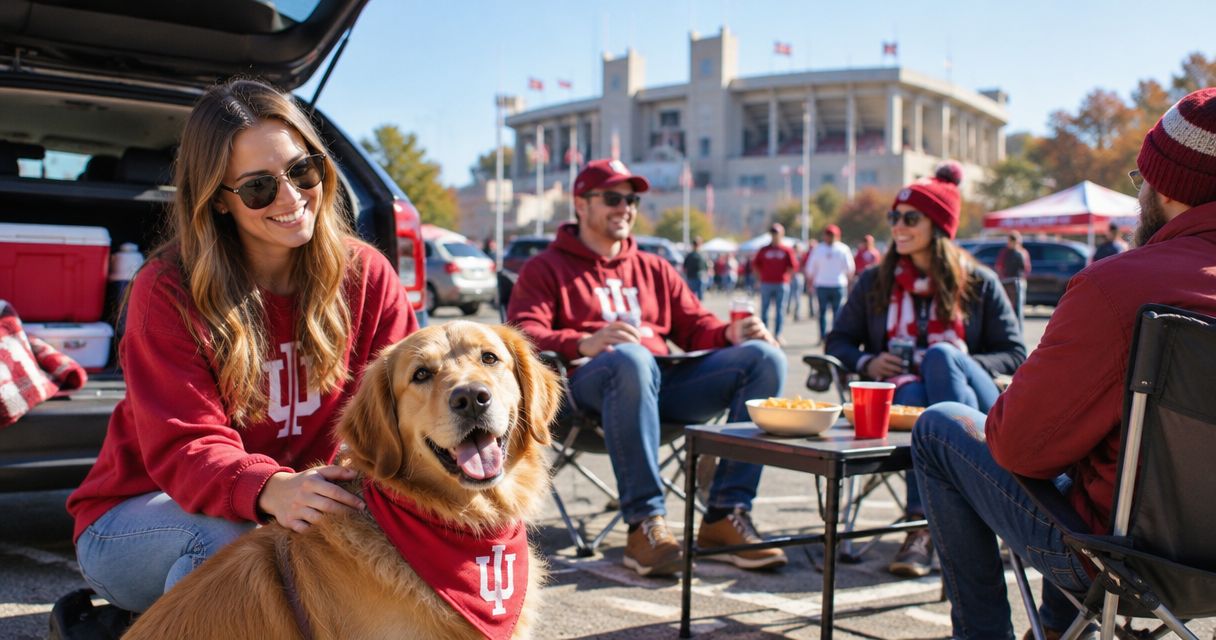
A tailgate where dogs are explicitly permitted fits fans who plan to remain outside with their pet. Choose this approach around the dog's supervision, not around how close the group can get to the stadium.
The property operator needs to permit both your dog and your intended tailgate setup. Keep those questions separate: permission to park does not answer whether you can occupy space beside the vehicle.
Pet-permitted tailgate pros:
- A designated person stays with the dog throughout the visit.
- You can organize food, water, breaks, and departure around the dog.
- Your group can shorten the outing without needing to finish a stadium visit.
Pet-permitted tailgate cons:
- Someone must remain responsible while others leave the tailgate.
- Noise, foot traffic, and neighboring activities still need assessment.
- Tailgating permission does not establish stadium admission for a pet.
Ask your group a direct question: who stays outside if everyone else wants to watch kickoff? Settle that before travel. A vague promise to “take turns” is not a handoff plan.
Best for: Fans whose main activity is an outdoor gathering with a dog, rather than attending the entire game together.
Verdict: Choose this approach only with explicit property permission and continuous supervision.
3. Day-of parking: best for a brief, flexible visit
Day-of parking fits a short visit when you are willing to assess the property and leave if it does not suit your dog. Ask about pet permission before entering or unloading, not after setting up beside your vehicle.
This approach gives you a chance to observe the immediate surroundings. It does not replace advance research, and seeing another dog on the property is not proof of permission.
Day-of parking pros:
- You can assess the immediate setting before deciding to stay.
- You can keep the visit centered on a short outdoor stop.
- You can decline a property whose rules or surroundings do not fit your dog.
Day-of parking cons:
- You defer important permission checks until arrival.
- You need a separate plan if the first property is unsuitable.
- A brief visit still requires supervision, water, and a safe departure plan.
For a 2026 day trip, decide your nonnegotiables before driving. If the operator cannot clearly answer the pet question, choose a different plan rather than interpreting uncertainty as approval.
Best for: Fans making a brief visit who accept that bringing the dog might mean leaving without staying for the festivities.
Verdict: Hold for short, flexible outings; skip this approach when your schedule depends on a settled parking plan.
Confirm these details before bringing your dog
Use this sequence with any parking operator. Keep the answers with your parking information so everyone in your group follows the same plan.
Pet permission
Ask whether your pet dog is permitted at the specific property for your 2026 game date. Explain whether the dog will remain near the vehicle or accompany someone elsewhere.
Request a clear answer you can refer back to. A listing that says “tailgating allowed” does not answer the pet question.
Caregiver plan
Name the person responsible for the dog during each part of the visit. If responsibility changes, make the handoff face-to-face rather than assuming someone else is watching.
If everyone intends to enter Memorial Stadium, arrange suitable care elsewhere. Do not use the parked vehicle as the dog's waiting area.
Walking route
Check the route from the actual lot entrance, including road crossings and places where vehicles turn. Evaluate it for your dog's mobility and comfort rather than relying on distance alone.
Ask where pet relief is permitted. Bring waste bags and remove waste promptly; a nearby lawn is not automatically an approved relief area.
Exit plan
Ask how you leave the property and whether returning requires separate permission. Do not assume a parking reservation includes in-and-out access.
Decide who drives if the dog needs to leave while other group members remain. Keep the vehicle keys with that person, not with someone already inside the stadium.
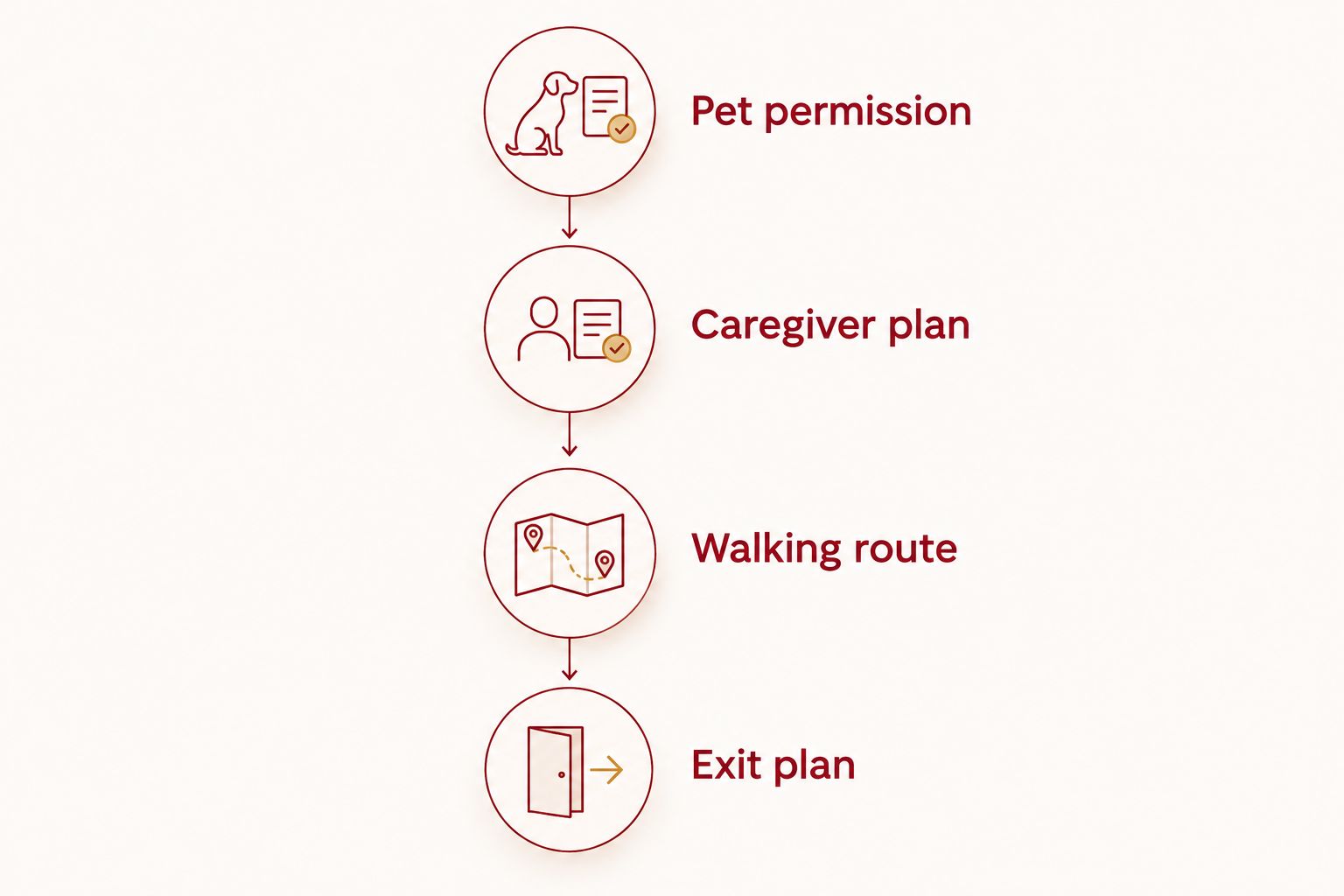
The order matters. There is no reason to plan a tailgate layout or stadium walk until the property operator has confirmed that your dog can accompany you.
What to bring—and what not to assume
Pack for your dog's needs rather than expecting a parking operator to supply pet amenities. Keep essential items accessible without unloading the whole vehicle.
- Bring drinking water and a portable bowl.
- Use a secure leash and properly fitted collar or harness.
- Check identification and your contact details before leaving home.
- Carry waste bags and any necessary medication.
- Bring a familiar resting mat if it helps your dog settle.
Keep the dog away from grills, hot cooking equipment, vehicle exhaust, and food left within reach. Positioning your group away from those hazards still requires permission to use the surrounding space.
Never leave a dog unattended in a parked vehicle during the game. An open window or shade does not make that a suitable care arrangement. If you cannot provide supervision outside the vehicle, arrange care away from the parking lot.
How these parking approaches were ranked
The ranking puts confirmed permission and continuous care ahead of convenience. Advance reservations rank first for planning; a supervised tailgate serves fans staying outside; day-of parking serves brief visits with flexible expectations.
This is not a ranking of measured noise levels, verified pet facilities, or individual parking surfaces. Ask about those details for the specific property rather than transferring assumptions from one nearby lot to another.
For 2026, use the same decision rule regardless of opponent or kickoff time: permission first, supervision second, convenience third. If either of the first requirements fails, change the dog-care plan before selecting parking.
Which parking approach should you choose?
Choose reserved parking after confirming your dog is permitted and deciding who provides care. That is the default for a planned trip because it settles the vehicle arrangement without pretending to settle the pet questions.
Choose a confirmed pet-permitted tailgate when staying outside with your dog is the main activity. Keep day-of parking for a short outing where leaving early—or not staying—is acceptable.
If everyone wants to attend the game together, arrange care away from the lot. No parking choice removes that responsibility.
Plan your game-day parking
Review reserved parking, then confirm pet permission for your specific visit.
FAQ
What's the best IU football parking option if I'm bringing a dog?
Choose reserved parking only after confirming pet permission and arranging continuous supervision. A confirmed pet-permitted tailgate is the better fit when you plan to remain outside with your dog.
Does guaranteed parking mean my dog is allowed?
No. A parking guarantee addresses your vehicle's space, not permission to bring a pet. Ask the operator about dogs at the specific property before your visit.
Can I bring my dog into IU Memorial Stadium?
Check the current IU Athletics animal-admission policy before planning to bring a dog to the stadium. Parking permission does not establish stadium admission, and service-animal questions require separate consideration from ordinary pet access.
Can my dog wait in the car while I watch the game?
No—do not leave your dog unattended in a parked vehicle while you attend the game. Arrange continuous care outside the vehicle where permitted, or suitable care elsewhere.
Is a short stadium walk enough to make parking suitable for my dog?
No. Check the actual route, crossings, walking surface, weather, and your dog's mobility. An advertised walking time is not a pet-suitability assessment.
Can a parking attendant watch my dog?
Do not treat a parking attendant as your dog's caregiver. Name a responsible person in your group or arrange suitable care separately.
What should I ask before bringing a dog to a tailgate?
Ask whether dogs and your intended tailgate setup are permitted at the exact property. Then confirm walking arrangements, relief expectations, supervision, and departure rules.
One last thing
Keep the car keys with the dog's caregiver. A well-planned departure fails if the only person who can move the vehicle is inside the stadium. Make that handoff before anyone leaves the group.